Herb-Buttered Roast Turkey Breast with Pan Gravy
A bone-in breast roasts in a fraction of the time a whole bird takes, and the drippings go straight into the gravy.
- Serves
- 6
- Prep
- 20 min
- Cook
- 1 hr 45 min
- Written
Method
-
Take the turkey breast out of the fridge 45 minutes before roasting so it cooks evenly.
-
Preheat the oven to 325°F. Mash the 6 tbsp butter with the garlic, thyme, sage, lemon zest, 1 tsp salt, and ½ tsp pepper into a paste.
-
Slide your fingers under the turkey skin to loosen it from the meat, then work half the herb butter directly onto the flesh. Rub the rest over the skin.
-
Scatter the onion, carrots, and celery in a roasting pan, set the breast on top skin-side up, and pour 1 cup stock into the pan.
-
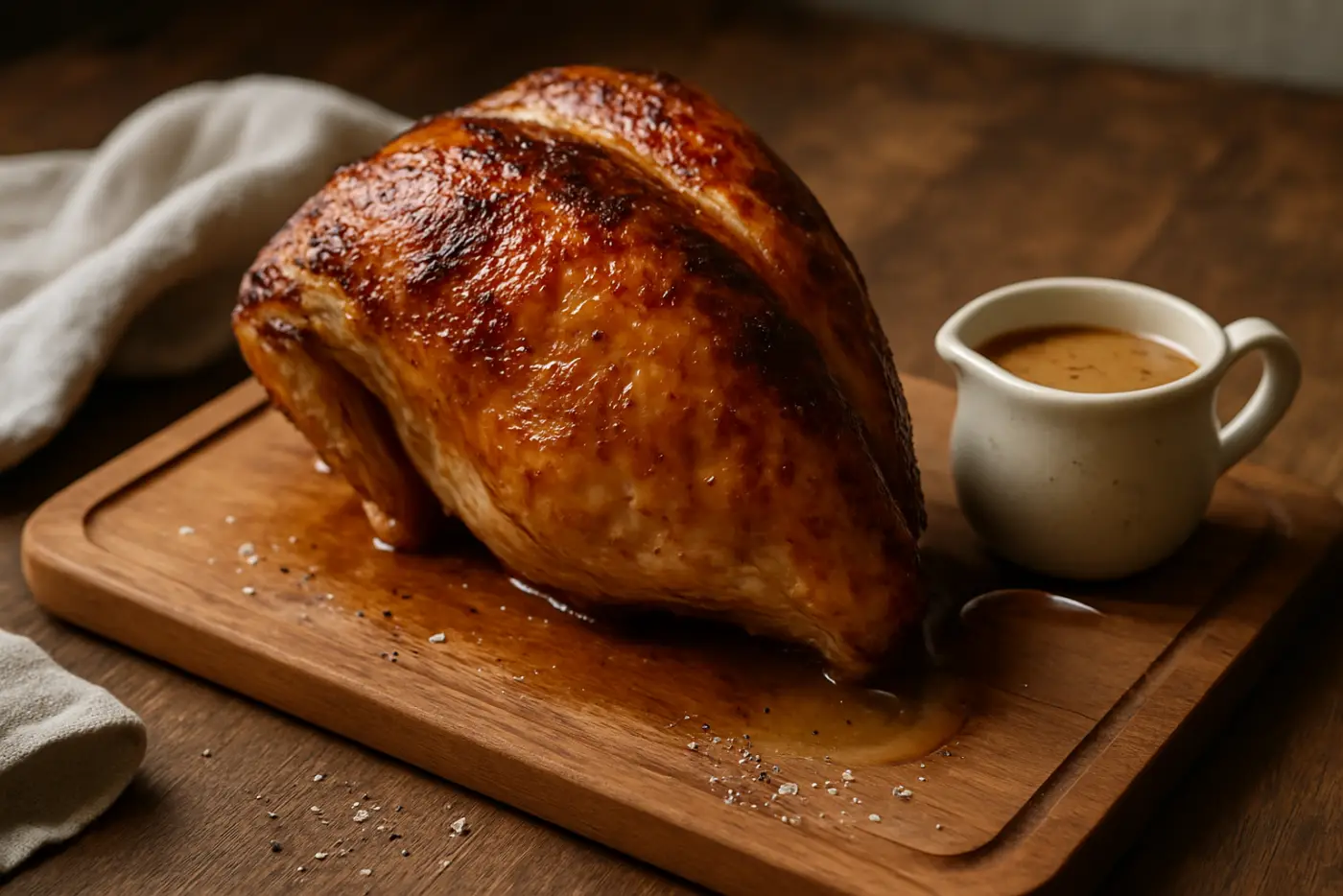
Roast, basting with the pan juices every 30 minutes, until the skin is deep golden and a thermometer in the thickest part reads 165°F, 1½ to 2 hours.
-
Transfer the turkey to a board, tent loosely with foil, and rest 20 minutes before carving — the gravy comes together while it rests.
-
Strain the pan juices into a measuring cup, skim off the fat, and discard the vegetables.
-
Melt the 2 tbsp butter in a saucepan over medium heat, whisk in the flour, and cook until it smells nutty, about 1 minute.
-
Whisk in the strained pan juices and the remaining 2 cups stock, then simmer, whisking often, until the gravy coats the back of a spoon, 5 to 7 minutes. Season with salt and pepper.
Notes
A whole turkey is a two-day commitment and mostly white meat you have to fight to keep moist; a bone-in breast gets you the same holiday centerpiece in under two hours, and the bone keeps it juicy without any brining. Loosening the skin and getting butter directly against the meat is what actually flavors it — butter rubbed only on the outside just bastes the skin.
No fresh sage or thyme on hand, 1 tsp of the dried version each works fine in the compound butter. The gravy scales easily if you’re feeding a crowd — just keep the stock-to-flour ratio and add more of both.