Everything Bagels
A stiff, low-hydration dough boiled before it's baked, the only way to get a shiny crust and a chew that fights back.
- Serves
- 8
- Prep
- 30 min (plus overnight rise)
- Cook
- 25 min
- Written
Method
-
Whisk the yeast and sugar into the warm water and let stand until foamy on top, about 5 minutes.
-
Mix the flour and salt in a large bowl, pour in the yeast mixture, and knead by hand or mixer until the dough is stiff, smooth, and barely tacky, about 8 minutes — it should feel much tighter than a sandwich-bread dough.
-
Divide into 8 pieces and roll each into a tight ball, then poke a hole through the center with your thumb and stretch it into a ring about 2 inches wide.
-
Set the rings on a parchment-lined sheet, cover, and refrigerate overnight, 12 to 18 hours.
-
The next day, bring a wide pot of water to a boil and stir in the honey and baking soda.
-
Heat the oven to 425°F and dust a baking sheet with cornmeal.
-
Boil the bagels in batches, 1 minute per side, until they puff and turn glossy, then lift out with a slotted spoon back onto the sheet.
-
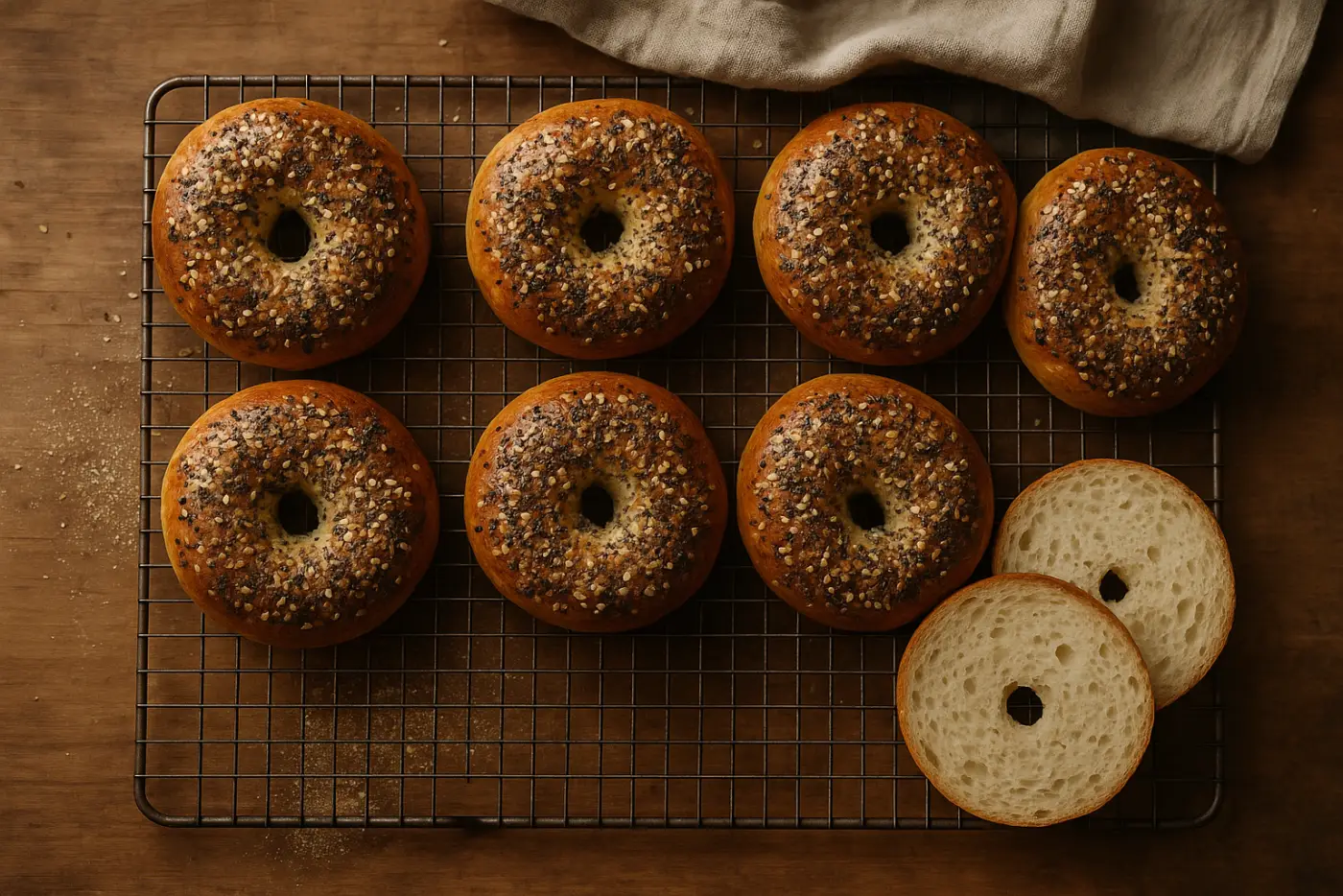
While still wet, press the tops into the everything seasoning and set seasoned-side up.
-
Bake until deep golden brown all over, 20 to 25 minutes, rotating the sheet halfway through.
-
Cool on a rack at least 15 minutes before slicing.
Notes
The boil is what separates a bagel from a very dense dinner roll — it gelatinizes the surface starch before the oven ever gets to it, which is where the shine and the chew both come from. Skip it and you’ve made a bread ring, not a bagel. Keep the dough on the stiff side of what feels right; a wetter dough boils up soft and loses the shape you spent time rolling.
The overnight cold rise isn’t optional either — it’s what gives a plain flour-water-yeast dough enough flavor to stand up to nothing but a schmear. They keep at room temperature a day, sliced and frozen for a month after that, and take well to whatever seed mix you’ve got instead of the everything blend.